
You’ve built real expertise. You know your products, your underwriters, your clients. You work hard – probably harder than most. So why does the business still feel like it’s running you, rather than the other way around?
The answer isn’t that you’re doing something wrong. It’s that broking well and running a brokerage well are two genuinely different skills and most brokers only discover that gap when they’re already deep inside it. The daily grind of quoting, renewing, firefighting, and problem-solving keeps you busy but doesn’t move the business forward. The harder you work, the more entrenched the cycle becomes.
Here’s the good news: recognising that gap is the first step out of it. This article breaks down exactly what that shift from broker to business owner looks like in practice, the specific changes to how you structure your client experience, generate referrals, and build systems that work without you being the answer to everything. If your business could be sharper, this is where to start.
The Broker Trap: Busy Doesn’t Mean Building
There’s a concept that business strategist Michael Gerber articulated in The E-Myth Revisited that resonates deeply in professional services: the difference between working in your business versus working on it. For insurance brokers, this plays out every single day.
The broker trap looks like this: your days are consumed by quotes, renewals, client calls, compliance tasks, and the inevitable fires that need putting out. You’re responsive, hardworking, and deeply capable. But at the end of the week, the actual business, its systems, its structure, its growth trajectory hasn’t moved an inch.
Insurance brokers operating in Australia face rising competitive pressure and evolving regulatory demands that make this trap even more costly. The time you spend firefighting is time you’re not spending on the strategic decisions that determine whether your brokerage grows or stagnates.
The irony is that the skills that make you a great broker can actually keep you stuck. Being highly responsive and technically capable means clients and problems flow directly to you. You become the solution to everything and when you’re the solution to everything, you become the bottleneck to everything.
This isn’t a personal failing. It’s a structural problem, and it has structural solutions.
Step Back to Move Forward: Working on the Business
At some point, every broker who wants to build something sustainable has to make a shift. Not from broking you don’t abandon what you’re good at but from being the sole operator of everything to being the architect of a system that works with you, not just because of you.
That shift starts with three practical changes in how you approach your business.
Step 1: Design a Repeatable Client Experience
Strong client relationships aren’t built by being available around the clock. They’re built through clarity, consistency, and positioning yourself as a trusted adviser rather than a reactive admin resource.
A structured, repeatable onboarding process doesn’t just improve efficiency, it creates the conditions for clients to refer others. Brokers who systematise their client journey from intake through to renewal to find that clients develop a fundamentally different relationship with their practice. Proactive relationship management, including scheduled reviews and structured follow-ups, is one of the most effective ways to position yourself as a strategic adviser rather than a transactional service provider.
Practical steps to build this include mapping your client journey from first contact through to renewal, creating standardised onboarding checklists that ensure nothing falls through the cracks, scheduling proactive review touchpoints rather than waiting for clients to reach out, and using tools like client portals to reduce administrative burden and free up time for revenue-generating work.
When you build a repeatable client experience, something important happens: you stop being personally responsible for every moment of that experience. The system carries it. That frees you up to focus on relationships and growth rather than administration.
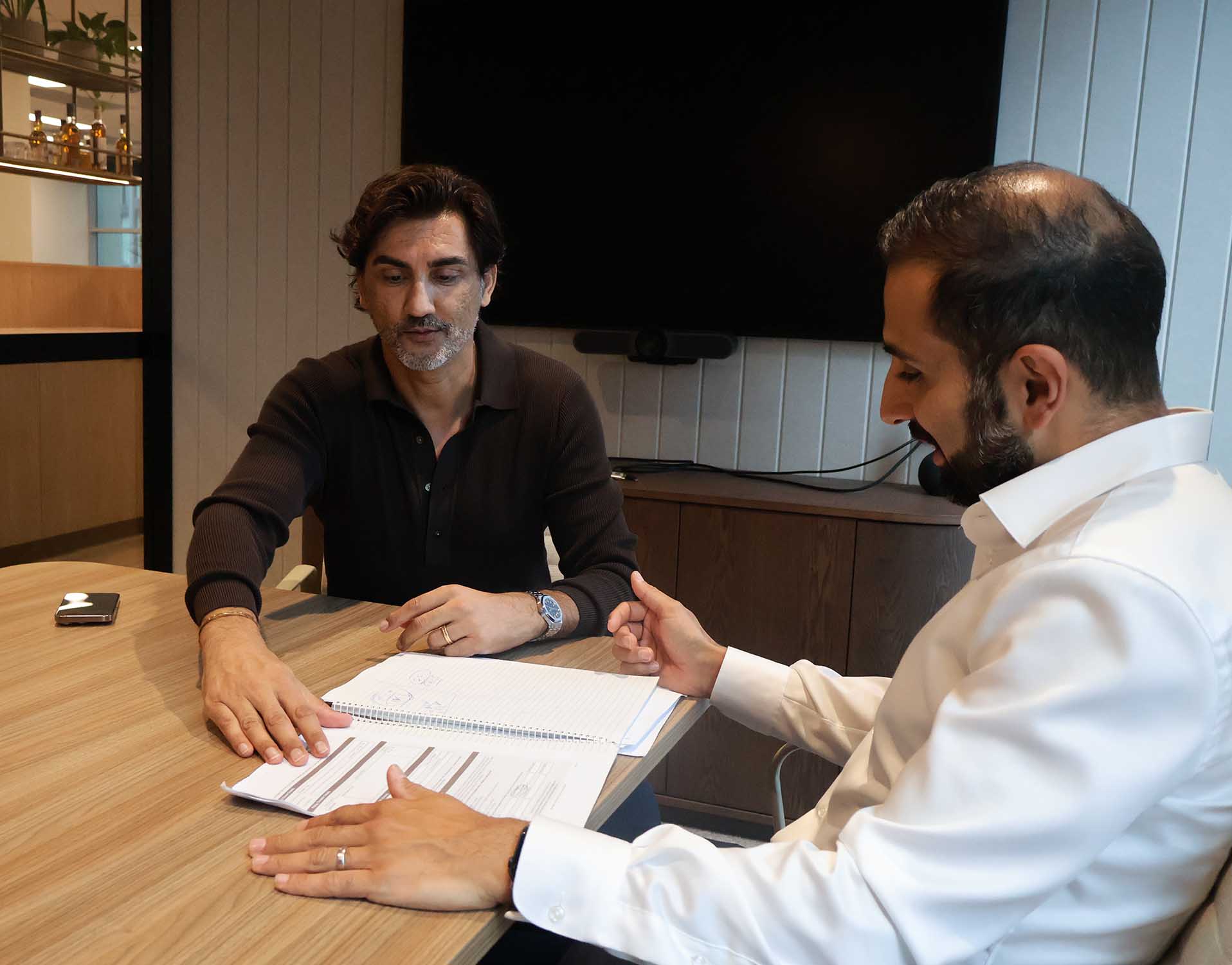
Better Broker’s Business Mentoring & Strategic Support helps members work through exactly this kind of structural design, using experienced broker-principals who’ve built sustainable businesses themselves, providing practical guidance that goes well beyond generic advice.
Step 2: Build Referral Systems Instead of Hoping for Referrals
Most brokers get referrals. Very few have a referral system. The difference between the two is significant.
Hoping for referrals means you do good work, and occasionally a client mentions you to someone. A referral system means you’ve deliberately designed triggers, follow-up processes, and partner relationships that generate introductions consistently and predictably.
The numbers make a compelling case for getting this right. Businesses with structured referral programmes report 71% higher conversion rates than those without one. Yet only 1% of sales professionals actually ask for referrals despite the vast majority of satisfied clients saying they’d be happy to make one if asked. That gap between clients who would refer and brokers who never ask is exactly where a referral system lives.
Building a referral programme means creating personalised referral links or codes, automating thank-you communications after successful claims, and tracking ROI with a target of generating around 20% of new business from referrals. Beyond your existing client base, strategic partnerships with professionals outside the insurance industry, accountants, finance brokers, solicitors are one of the most effective ways to build a referral network that compounds over time.
The shift from reactive to proactive referral generation is one of the clearest indicators that a broker is operating as a business owner rather than simply a practitioner.
Step 3: Decide Which Clients You Shouldn’t Be Servicing
This one feels counterintuitive, but it’s genuinely liberating. The idea that not every client is a good client for your business.
Proactive client management includes the discipline of identifying which clients are consuming disproportionate time and energy relative to the revenue they generate. High-maintenance, low-value clients are often the primary source of the firefighting that keeps brokers stuck in reactive mode. Identifying and gracefully transitioning these clients frees up significant capacity and creates space to pursue better-fit opportunities.
The process of client segmentation doesn’t have to be ruthless. Tiered service models where your highest-value clients receive a premium experience and standard clients receive a well-designed but more streamlined service. Allowing you to maintain quality across your book while allocating your time where it generates the most return. For clients who genuinely don’t fit, a professional referral to a more suitable provider maintains your reputation and your network.
Better Broker’s approach to business mentoring covers portfolio composition and client segmentation directly – the kind of strategic guidance that helps you make these decisions with confidence rather than hesitation.
Structure Around Reviews, Renewals, and Follow-Ups
One of the clearest signs of a brokerage operating as a business is a structured approach to the renewal cycle. Yet for many brokers, renewals are still a reactive scramble, a reminder arrives, the clock is ticking, and the process starts from scratch each time.
Using a broker gives clients access to professional, structured policy management but that professionalism has to be built into your internal processes first. Building structure around renewals means establishing automated calendar triggers well in advance of renewal dates, creating standardised review agendas that position you as a strategic adviser rather than a policy processor, and using your CRM to track not just policy details but client conversations, risk changes, and relationship notes.
A well-designed renewal and review process, supported by the right technology, is one of the most effective ways to reduce client churn and deepen relationships over time. When renewals become a system rather than a scramble, your clients experience a more professional, consultative service and you reduce the annual crunch that burns out brokers and their teams every June, July, and September.
Better Broker’s Administrative & Claims Support provides additional capacity during exactly these peak periods so that even as you build better systems, you have a pressure valve for when workloads spike.
Positioning as Adviser, Not Admin
There’s a positioning question underneath all of this that’s worth addressing directly: How do your clients see you?
The brokers who build the most durable practices are those who position themselves as strategic advisers, not just policy managers. If you’re available 24/7 and solving every problem personally, clients will come to see you as a highly responsive service provider. That’s valuable but it’s also fragile. You become associated with availability rather than expertise, and availability is something any competitor can replicate.
Positioning yourself as a trusted adviser means leading conversations with insight rather than waiting to be asked. It means explaining why you’re recommending a particular approach, not just what you’re recommending. It means being the person who raises risk issues the client hasn’t thought of yet, particularly in areas like cyber risk, which continues to grow as a concern for Australian businesses.
The brokers who make this shift successfully find that stronger adviser positioning directly improves retention, referrals, and their ability to charge appropriately for their expertise. It’s a communication shift as much as a process shift and one with compounding returns.
Better Broker’s resources on professional development and education are built around exactly this kind of broker growth helping members develop the skills and confidence to operate at a higher strategic level with their clients.
When the Business Works With You
The goal of all of this, is the systems, the segmentation, the structured renewals, the referral programmes become a brokerage that doesn’t depend entirely on you being present for everything.
When the business is properly built, you stop being the bottleneck. Clients receive consistent service through systems and processes, not just through your personal effort. New business flows through deliberate channels, not just chance encounters. Renewals are managed through structured workflows, not last-minute scrambles. And your own time is freed up to do what actually moves the business forward: building relationships, pursuing new opportunities, and making the strategic decisions that determine where the business goes next.
This transition from practitioner to business owner is one of the most common and most significant inflection points in a broker’s career and it’s also one of the least supported. Most AR networks provide compliance infrastructure and market access. Very few provide the business guidance that actually determines whether brokers build something sustainable.
You Don’t Have to Figure It Out Alone
The brokers who make this transition most successfully tend to share one common advantage: they have access to people who’ve done it before.
Better Broker Network is an Australian AR network founded by Gurnaik Tiyur and Ryan Passagne specifically because this kind of practical, experienced guidance didn’t exist when they were navigating these challenges themselves. After 16 years of building and running a successful Australian insurance brokerage, they created the network they wished had existed, one built around genuine business mentoring, not just administrative processing.
If you’re great at broking but recognise that the business side could be sharper, that’s not a weakness. It’s just the next stage of growth. And it’s exactly the stage where the right support makes the difference.
Ready to take your brokerage to the next level? Talk to the Better Broker Network team about what joining a boutique AR network built by brokers, for brokers, actually looks like in practice.
Better Broker Network is a boutique Authorised Representative network, providing experienced business mentoring, placement support, and operational guidance to Australian insurance brokers at every stage of growth. Learn more at betterbroker.net.au.